• Home
  • About
  • Webdancers
  • Contact

GregFalken.com

Thoughts on humanizing technology

  • Technology
  • At Home
  • Music and the Arts
  • Education
  • Notes
Insured Again

Insured Again

December 18, 2013 By Greg Falken 1 Comment

Today I paid Anthem Blue Cross the first health insurance premium that I’ve paid since 2008, when our family dropped out of the privately insured market. At that time I was paying more than I could really afford for myself and my son. My wife, who has a preexisting condition, had been off the policy for about a year. When I tried to switch to a different policy with a higher deductible, I was surprised to be denied coverage due to a preexisting condition of my own, which I have since learned was misdiagnosed.

So we joined the ranks of the uninsured. Luckily, we were all relatively healthy (preexisting conditions notwithstanding) and were not in the habit of regular doctor visits. Over the years we had few reasons to seek medical treatment: ob/gyn visits for Amy, a drained cyst for me and lots of dental bills, which wouldn’t have been covered anyway. But hanging over us was the worry: what if something big, or even something medium sized, were to happen? There are too many stories of medical bills wiping out all the money a person has in the world. There but for the grace of God went us.

And it wasn’t like I was ready to rush into battle to fight to get our old insurance back. Not only was it more than we could afford, but for the money we paid out we got exactly nothing back in return. We never reached our deductibles and we paid out of pocket for treatments that we actually received, like dental care and acupuncture.
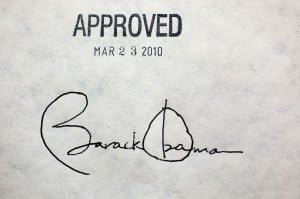
Obama Healthcare SignatureWhen the Affordable Care Act was passed in 2010, I was cautiously optimistic that it would apply to us. I remember talking with our acupuncturist when we were discussing whether I should try western medicine for a particularly stubborn problem. “You only have to wait four years”, he said. Little did I know the long and contentious route that the law would take to being enacted.

Now here we are, paid up (at a subsidised price that we can afford) and ready to have health insurance in 14 days. I know there are those who say that others are sacrificing so that we can take advantage of this program. To them I say thank you and if our roles were reversed, I would do the same for you.


At Home Tagged: aca, obamacare

A Desktop Wallpaper Gift from Trey Ratcliff

A Desktop Wallpaper Gift from Trey Ratcliff

December 16, 2013 By Greg Falken 4 Comments

If you use your computer all day long, like I do, you know the importance of good desktop wallpaper. The wrong image can nag at you, break your concentration or make it uncomfortable to sit in front of your screen. Most people also use their desktops to personalize an otherwise unfeeling machine. Just look at the screens of the people around you: some have kids, some are nature lovers and some…well, you just wonder about them.

A year ago, photographer Trey Ratcliff gave away 1,000 free HD wallpaper images on his Google+ page, posting them under a Creative Commons noncommercial license. This means you can use them for personal stuff, like desktop wallpapers or phone backgrounds, your personal blog, etc. These are gorgeous images by one of the world’s top photographers. If you need them larger than 2500 pixels across, you can also download them full-size from his personal portfolio site.

Desktop wallpaper hints

  • Use a photo editing program to resize the image to the dimensions of your monitor(s). In Windows 7, right-click anywhere on the desktop and select “screen resolution” to find your screen size (other operating systems: you’re on your own).
  • If you have dual monitors, you can stretch the image across both of them by doubling the width of your image, then selecting “tile” as the picture position (again, in Windows 7).
  • Experiment with images until you find one that works well when it’s partially covered up, as it will be for much of the time you’re looking at it. I like fairly abstract or geometrical images for this reason.
  • Have fun!

The SpiralMy current wallpaper, “New Spires” (above) replaces this equally beautful image of a spiral staircase that is part of this wonderful collection. Thanks, Trey for your generosity.

Technology Tagged: computer, Trey Ratcliff, wallpaper

If I’d only known: Making your teaching memorable

If I’d only known: Making your teaching memorable

November 3, 2013 By Greg Falken 2 Comments

When I was learning to drive, my driving instructor told me that when I pulled to a stop behind another car, I should always be able to see its rear bumper. Following this simple rule meant that I never had to learn later in life how to stop at an appropriate distance behind someone at a stop light. It seems that we often miss out on the answers to those key questions, either because no one thinks to teach us something so basic or because we chose not to be listening. When we learn those lessons later – sometimes years later – we often think, if I’d only known that, things would have been so much easier.

When I asked some friends for examples of “if I’d only known” moments, this is what I heard:

If I’d know the benefits of a high protein diet, I would have cut carbs a long time ago!

The most important lesson I learned way too late is to figure out the purpose of any activity.

If I’d only known how to breathe properly and mindfully I wouldn’t have needed medication for panic attacks all those years.

If I’d only known that not everything needs to be perfectly planned before starting, I would have been a lot more productive.

There is a surprisingly large difference between knowing nothing about a subject and knowing enough to start learning about it. It is in this gap that those “if I’d only known” lessons are especially important. Students are often looking for something that will give them a grasp on the subject. During that time their minds are wide open, as they look for the hook that will give them a place to start. If you can provide that, it may prevent an “if I’d only known” moment somewhere down the road. It is also the time when providing the wrong information can be particularly harmful.

If you are in the position of providing people with new information, ask yourself these questions:

  • What have I learned about this subject that I wish I had known sooner?
  • Is there an analogy that can be used to make this foreign subject more familiar?
  • What does this person already know about the subject that can be referenced?
  • In what way is this subject similar to something that this person already understands?
  • How can I make this person feel at ease with their current level of understanding?

Think carefully about how you will introduce a new subject, because it will be very difficult to undo the first few concepts that a person hears. If you do misspeak, clear things up right away: “Wait, I said that wrong, let me start again”, is a good approach.

If you’re really lucky, people will recall your words years later. I still remember a lesson on flying instrument approaches with  a very experienced pilot named Dan Chauvet who told me, “if the needles aren’t centered [i.e. you’re off-course], you need to make very small corrections but you need to do it right now.” Thanks, Dan.

Photo credit: Martyn Wright

Education

The Go, No-Go Decision

The Go, No-Go Decision

October 15, 2013 By Greg Falken Leave a Comment

When I flew chartered airplanes for a living, I had to decide every day (sometimes several times a day) whether the job we were expected to do could be done safely. Weather was the biggest factor, because the single and twin engine aircraft we flew didn’t fly above the weather, they flew in it. I remember in particular a flight from Watsonville, CA (WVI) to Sacramento Executive Airport (SAC), a one hour flight in a six-seat Piper Seneca. The weather was lousy; low overcast and rain. As pilot-in-command, it was up to me to decide if the flight could proceed. A number of factors went into the decision to launch:

  • While the weather was rotten, it was above the minimums established by the FAA for both takeoff and landing.
  • The passenger’s company (a large construction firm) had a policy of always flying with two pilots, even though only one was required by the regulations.
  • I was very familiar with the airplane and had plenty of recent experience flying by instruments.
  • My expectations for the flight didn’t include anything that I or the airplane couldn’t reasonably be expected to handle.

We took off into the overcast and spent the next 50 minutes in the clouds and rain. The two of us who were flying stayed very focused on our position (this was in the days before GPS and moving map displays) and our procedures. We emerged from the clouds about 500 feet above the airport and circled to land on the runway in use. Our passengers spent an hour in the plane instead of four hours in a car and the charter company got paid. A successful outcome all around.

In business today, there is lots of talk about the value of saying no: Perhaps saying yes will take you away from your primary mission, or will cause you to lose focus, or the chances of success are simply too low. All of these are valid reasons to pull the plug on a particular project or task. Here are some useful questions to ask when coming to a go, no-go decision:

  • Can you proceed safely? There may be dangers (not necessarily physical) attached to this decision. Consider how they will affect you and the others involved.
  • How important is it to do this now? There might be a clear advantage or disadvantage to a delay.
  • What will the impact be on others? Keeping commitments is important, as is clear communication when they must be renegotiated.
  • If this isn’t done now, how much more difficult does it become to do later? Momentum is a hard thing to get back once given up.

By law, a pilot has have alternatives. Good decisions are based on awareness of a number of possible outcomes, which narrow to a single choice as events unfold. Just make sure that you can divert to an alternate if things don’t go as expected.

Cloud photo: Wikimedia Commons

Education Tagged: decisions, flying

Malala Yousafzai Extended Interview

October 12, 2013 By Greg Falken Leave a Comment

Malala Yousafzai is the youngest person ever to be nominated for the Nobel Peace Prize, for actions starting when she was just 12 years old.

Sending people to school is the best way to fight terrorism.

Link to part 1 on TheDailyShow.com

Link to part 2 on TheDailyShow.com

Link to part 3 on TheDailyShow.com

See also an interesting discussion on Quora: Is Malala Yousafzai a good example or bad?

Education Tagged: Jon Stewart, video

« Previous Page
Next Page »

Stay in touch

Sign up to receive occasional email updates, including new blog posts.

As a web developer since 1995, I find my attention increasingly drawn to the intersection of computers, the Internet, communication and education. On this blog, I indulge my interest in these and several other topics. I hope you find them interesting too. Read More…

  • LinkedIn
  • RSS
  • Twitter
  • YouTube

Recent Posts

3 Words for 2021

January 1, 2021 by Greg Falken Leave a Comment

The message we should be hearing about masks: An aviation parable

October 24, 2020 by Greg Falken Leave a Comment

3 Words for 2020

January 1, 2020 by Greg Falken Leave a Comment

3 Words for 2019

January 1, 2019 by Greg Falken Leave a Comment

3 Words for 2018

January 1, 2018 by Greg Falken Leave a Comment

Latest Tweets

  • Just now
  • More on Twitter

Search

Tag Cloud

3 Words Aardvark audio bluetooth Chris Brogan Chrome computer contract Crazy Ivan education FCC flying Google google nexus home hyperlocal IndieWeb learning mobile mp3 music mvno net neutrality Network Sierra paleo phone politics posse primal programming QR code Rick Foster Sharon Crost sim skellie social media sonora Strawberry three words Tom Maguire Tuolumne twitter video WordPress writing

Return to top of page
Copyright © 2009–2026 · Website by Webdancers · Log in