• Home
  • About
  • Webdancers
  • Contact

GregFalken.com

Thoughts on humanizing technology

  • Technology
  • At Home
  • Music and the Arts
  • Education
  • Notes

For Better Content, Go Local

December 15, 2009 By Greg Falken 3 Comments

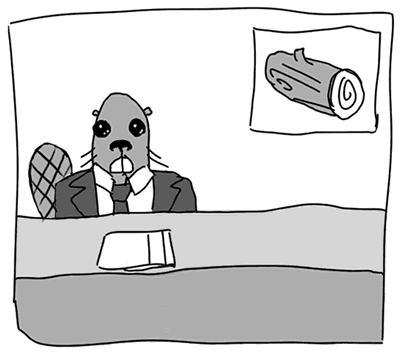
Beaver News

Beaver News

There has been a lot of talk lately about the quality of information available online. The debate has centered around “content farms”, such as Demand Media and the current incarnation of AOL (oops, sorry, Aol.). Kicking off this round was Michael Arrington, who wrote in a post titled The End of Hand Crafted Content:

On one end you have AOL and their Toyota Strategy of building thousand of niche content sites via the work of cast-offs from old media. That leads to a whole lot of really, really crappy content being highlighted right on the massive AOL home page….

On the other end you have Demand Media and companies like it. See Wired’s “Demand Media and the Fast, Disposable, and Profitable as Hell Media Model.” The company is paying bottom dollar to create “4,000 videos and articles” a day, based only on what’s hot on search engines. They push SEO juice to this content, which is made as quickly and cheaply as possible, and pray for traffic. It works like a charm, apparently.

These models create a race to the bottom situation, where anyone who spends time and effort on their content is pushed out of business.

Journalism professor Jeff Jarvis thinks that decrying the lowering of information standards online rather misses the point.

They may be right. But then again, the internet has always been filled with crap. So the challenge has always been how you find the cream. That’s where opportunities lie. That’s what Google saw. The new question is whether Google can keep ahead of the content farms and continually find new and better ways to find better stuff. I’ll bet on Google over crap-creators. But they better get cracking.

I see three rings of discovery today: search (Google); algorithms (see: Google News, Daylife); and humans (see: Twitter)…. As search becomes more personal and no longer universal, SEO as a dark art and as the fertilizer for content farms will diminish and the social graph — our own circles of authority — will become more important in search as well. So I have faith that there are solutions to stem any rising tide of crap.

The rise of hyper-local media taps directly into Jarvis’ third ring of discovery: humans.  In these systems, there are a couple of routes by which content (e.g. a blog post, podcast or video) might be generated. Either someone takes it upon themselves to produce something of interest to them, in which case they have a vested interest in its quality, or content is produced upon request and there is a visible relationship between the producer and consumer. In either scenario, high quality, individualized content can be the result and in a local community of readers, it can be easily discovered.

Doc Searls, in his brilliantly titled post, The Revolution Will Not Be Intermediated (us oldsters get the reference), also suggests that we are not the slaves to media manipulation that some fear. He doubts that “fast food content” is going to shut down quality writing, any more than McDonald’s stifles serious chefs.

Nothing with real real value is dead, so long as it can be found on the Web and there are links to it. Humans are the ones with hands. Not intermediaries. Not AOL, or TechCrunch, or HuffPo, or Google or the New York Freaking Times. The Net is the means to our ends, not The Media, whether they be new disruptors or old disruptees. The Net and the Web liberate individuals. They welcome intermediators, but they do not require them. Even in cases were we start with intermediation — and get to use really good ones — what matters most is what each of us as individuals bring to the Net’s table. Not the freight system that helps us bring it there, no matter how established or disruptive that system is.

The intermediaries who hope to manipulate our online habits are smart, powerful and well funded. However at this point in time, they rely on massive amounts of generalized data (statistics) for their models to work. The smaller the group, the less well targeted it can be. So, by building personal networks and using sites that cater to our communities (either geographical or ideological), we strengthen the web and feed the demand for high quality, relevant and personal information.

Update: ReadWriteWeb has posted Jay Rosen’s interview with Richard Rosenblatt, the founder and CEO of Demand Media. Read it here.

Image by WickedSunshine.com (NSFW)

On the

other end you have Demand Media and companies like it. See Wired’s “Demand Media and the Fast, Disposable, and Profitable as Hell Media Model.” The company is paying bottom dollar to create “4,000 videos and articles” a day, based only on what’s hot on search engines. They push SEO juice to this content, which is made as quickly and cheaply as possible, and pray for traffic. It works like a charm, apparently.

These models create a race to the bottom situation, where anyone who spends time and effort on their content is pushed out of business.

Technology Tagged: AOL, content farm, Demand Media, Doc Searls, hyperlocal, Jeff Jarvis, Michael Arrington

Community Access Internet Project

October 27, 2009 By Greg Falken Leave a Comment

Internet Lounge
Working with a group of committed people here in Tuolumne County, I have submitted a proposal to the Knight News Challenge. Funded by the John S. and James L. Knight Foundation, the Challenge seeks innovations that use new or available technology to distribute content in local communities. There are only three rules:

  1. Use digital, open-source technology.
  2. Distribute news in the public interest.
  3. Test your project in a local community.

A description of the project follows. Please visit the application at the Knight News Challenge and add your comments and rate the project. Changes can be made to the application until the December 15th deadline and I welcome the chance to incorporate your suggestions.

Community Access Internet Project

Describe your project (max. 1800 characters)
The Community Access Internet Project (CAIP) provides web-based news and community information to rural areas. It draws on user-generated content and provides community education in the effective use of online media. The goal is nothing less than creating a community of digitally literate consumers and producers.

Should this project be funded, it will initially serve Tuolumne Co., CA (pop. ~50,000), located in the Central Sierras, 120 miles east of San Francisco. The county’s roots are in the gold rush of the 1850s and it has a rich historical character. Economically, the region struggles, with unemployment hovering around 13%.

Like community broadcasting (radio) and public access cable (TV) before it, participation is open to the entire community. However, CAIP goes beyond simply providing media access, by actively pursuing community outreach. CAIP provides classroom instruction and guidance on effective online communication, blogging, audio and video production and legal issues.

A paid core staff manages day to day operations and curates content, such as calendars of events, local news (road closures, snow days, fire information) and news features, including podcasts and videocasts. Featured content may be produced both by the core staff and “graduates” of the instructional programs. Blog space is openly available and public blog entries may be “promoted” to featured status by the core staff.

CAIP partners with other community organizations such as schools, libraries, news organizations, local government, service organizations, chambers of commerce, non-profits, etc.These organizations enhance the capabilities and reach of the project, bringing it to the attention of a broad cross-section of the community.

How will your project improve the way news and information are delivered to geographic communities? (max. 750 characters)
In our community, online information is isolated on numerous sites. CAIP provides technical assistance to the operators of these sites to syndicate their public content, making it available to any web site that wishes to republish it. Syndication will be a significant source of content for CAIP, without requiring any group to give up control of their own information.

The Community Access Internet Project provides a publishing platform for individuals and groups in the community. It provides an alternative source of online news, commentary and entertainment, produced locally and addressing the needs of the community. Because the featured areas of the site are curated, it can develop a reputation as a trustworthy and reliable news source.

How is your idea innovative? (new or different from what already exists) (max. 750 characters)
There are many existing variants of the community publishing platform. We plan to build on the best of these, with an emphasis on syndication and aggregation tools. Simply aggregating existing calendars of events will be an enormous benefit to the community.

The educational and community outreach component of this project makes it especially unique. During the initial planning phase, we will engage with the community to learn what information they want to have available online, tailoring the site to meet these needs. With a successful implementation in Tuolumne County, we hope to bring this model to other small, rural communities around the country.

What experience do you or your organization have to successfully develop this project? (max. 1600 characters)
As the submitter of this proposal, I have over 15 years of web development experience and a strong background in both communications and technology. My company, webdancers, was established in 1995 and has assisted in the development and marketing of hundreds of web sites. This experience however, brings to the table only a subset of the skills necessary to develop the Community Access Internet Project. For the rest, I turn to our community.

Network Sierra is a grassroots organization that includes individuals representing a wide range of community interests. Created in 2006, its goal is to use technology to bring our communities closer together and to maintain our rural character in a 21st century economy. We include technologists, arts organizers, educators, writers, marketers, local government officials and retirees. Network Sierra will serve as the parent body for CAIP. In the initial stages, another non-profit agency will act as Network Sierra’s fiscal agent, however we anticipate that Network Sierra will seek non-profit corporation status.

The Community Access Internet Project will be developed in consultation with a Network Sierra advisory board, which will hire the core staff and oversee the implementation of the programs described above.

Leveraging the skills and dedication available in our community, along with emerging social technology, CAIP gives voice to the many diverse groups in our region, providing them with both the training and a forum to speak clearly to their own communities and beyond.

Photo by Tom Magliery

Technology Tagged: community access, hyperlocal, Knight News Challenge, Network Sierra, Tuolumne

Stay in touch

Sign up to receive occasional email updates, including new blog posts.

As a web developer since 1995, I find my attention increasingly drawn to the intersection of computers, the Internet, communication and education. On this blog, I indulge my interest in these and several other topics. I hope you find them interesting too. Read More…

  • LinkedIn
  • RSS
  • Twitter
  • YouTube

Recent Posts

3 Words for 2021

January 1, 2021 by Greg Falken Leave a Comment

The message we should be hearing about masks: An aviation parable

October 24, 2020 by Greg Falken Leave a Comment

3 Words for 2020

January 1, 2020 by Greg Falken Leave a Comment

3 Words for 2019

January 1, 2019 by Greg Falken Leave a Comment

3 Words for 2018

January 1, 2018 by Greg Falken Leave a Comment

Latest Tweets

  • Just now
  • More on Twitter

Search

Tag Cloud

3 Words Aardvark audio bluetooth Chris Brogan Chrome computer contract Crazy Ivan education FCC flying Google google nexus home hyperlocal IndieWeb learning mobile mp3 music mvno net neutrality Network Sierra paleo phone politics posse primal programming QR code Rick Foster Sharon Crost sim skellie social media sonora Strawberry three words Tom Maguire Tuolumne twitter video WordPress writing

Return to top of page
Copyright © 2009–2026 · Website by Webdancers · Log in